Email meEmail meEmail me
Powered By erinations /
Email me Email me Email me Email me

Friday, March 29, 2013

Anilao, Philippines


Mention this destination and mostly everyone that is not an avid underwater photographer will scratch their head and ask, "you’re going where?"

The Philippines have always remained on the fringe, never a primary dive destination.

But for divers and photographers in the know, this is not the case. The Philippines are perhaps one of the best kept secrets of all.

Getting there is an easy hop, skip and a long jump from LAX. Unlike the time consuming travels to Indonesia, im diving the day I arrive.

Manila is densely populated with traffic jams throughout the city. High pitched honking, loud music, people everywhere. Scooters weave in and out of traffic, some with sidecars packed with the whole family aboard.

Anilao lies at the tip of the golden triangle of the Indo-Pacific. The golden triangle is designated as the most biodiverse area on the globe, rich in sea life, corals and invertebrate life. Its no wonder that this place is a mecca for researchers and photographers alike. One could expect to find hundreds of different Nudibranch species, Rhinopias, Ambon Scorpionfish, Pacific Walkers, Pegasus Mothfish and Blue Ring Octopus. There are several species of Pipefish, at least three varieties of Seahorses from the coveted Pygmy’s to the even more rare, Giant Seahorse, standing close to a foot high with outstretched tail. But one of the strangest and most bazaar creatures lives within the sand. The name of this creature was coined for the demasculating wounds inflicted by Lorena Bobbit on her husband, The Bobbit Worm. (Eunice aphroditois) Bobbit worms are a carnivorous Polychaete worm. They can be lightning fast, striking wildly from its hidden lair, dragging its prey under in a flash. After seeing the Bobbit worm strike for the first time I immediately inflated my BC to lift myself off the sand. 


Anilao is known for it’s varied substrate and relief. Current swept dive sites keep a continuous flow of food going for the many critters found here. In addition to the critters, expect to find soft corals, hard corals, classic muck dives, walls and dropoffs. The Reef structures are alive with moving colors and blizzards of colorful Anthias, big schools of Jacks and more. This place really has something for everyone. 


Continuous discoveries, endless beauty and wonderful people make Anilao a very compelling destination for this photographer and many others.

The best kept secret is out…


image and blog source: divephotoguide

Monday, October 8, 2012

Camiguin Island

image source: flickr

Camiguin is a small island province of the Philippines off the northern coast of Mindanao. It belongs to the Northern Mindanao region. Its capital is Mambajao and it is the second-smallest province both in population and land area. Only Batanes is smaller. The island of Camiguin is in the Bohol Sea about 10 kilometers north of Misamis Oriental.

image source: flickr


The name Camiguin is derived from the native word “Kamagong”, a species of the ebony tree that thrives near Lake Mainit in the province of Surigao del Norte, the region from which the earlier inhabitants of the islands, the Manobos, came. Kinamigin, the local language of Camiguin, is closely related to the Manobo language.

An earlier Spanish geography book writes the island as "Camiguing". There is reason to suppose the Spaniards dropped the final g.


image source: flickr


Lanzones festival is the most colorful moment of Camiguin Island, people like this delicious, very sweet fruits and the happiness of the festival. In the month of October , People from all over the world will come just to watch this big event in Mambajao.. 

image source: flickr

The people of Camiguin are called Camiguingnon or Camiguinon. The dialects widely spoken in the province are Cebuano and Hiligaynon while only a few people still speak Kinamigin, the ancient tribal dialect of Camiguin. Only in the municipality of Sagay is where the people has retained the usage of the Kinamigin language. English is also widely spoken by the local population.


image source: pinoyambisyoso

Sunken Cemetery

During the volcanic birth of Mt. Vulcan that lasted from 1871 to about 1875, some areas in the town of Bonbon subsided, sinking the cemetery of the town to below sea level. The place is commemorated by a huge cross erected in 1982.

image source: flickr

Camiguin - Coca cola limited edition softdrink


To promote tourism in Camiguin, Coca Cola agreed to this unique idea of bottling Coke products with a Camiguin promotional cover...

You think you got some gorgeous photos than these

Wednesday, September 26, 2012

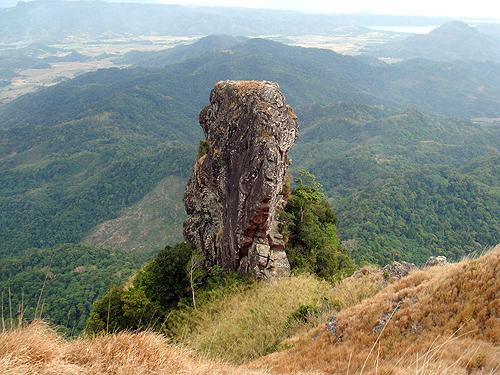
Pico de Loro Cove

Pico De Loro (Maragondon, Cavite) 


Pico de Loro offers a magnificent 360 view from the summit. Located approximately 85 kilometers southwest of Manila by road, located within Cavite and Batangas rolling mountains, it is situated where the Caraballo Mountains are in the north, Nasugbu, Batangas in the south, Maragondon on the east and the South China Sea on the west. Considered the highest mountain in the Cavite province, Pico de Loro is the highest point within the boundary of Cavite and Batangas. The view from the summit is awesome, facing the sea on the north-eastern side of the Manila Bay area. You can actually see ships passing by the Batangas and Bataan shore lines while the entire Batangas and Cavite on the south-eastern side will offer you a magnificent view of the south-eastern mountains like Batulao and Talamitam.


You think you got the best photos from this place? 
Email it to me and lets share it to everyone!

Sunday, September 23, 2012

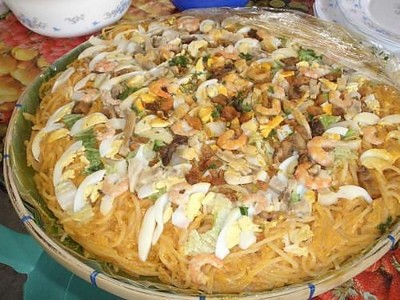
Pansit Malabon

Pancit Malabon is a type of pancit that originated in Malabon City, Metro Manila, Philippines. It has a yellow-orange color due to a sauce that includes patis (fish sauce) and bagoong (shrimp paste). Its toppings draw heavily from the fresh seafood that is available in the area and may include fresh shrimp, squid, oysters, and hard-boiled duck or hen eggs, as well as pork.


This flavorful dish originated in the city of Malabon. This dish was called “pancit bame”. It consisted of oysters, squids, shrimps, smoked fish, chicharon, crab pinchers and duck eggs laid over fat rice noodles with thick golden sauce served in a bowl with bamboo chopsticks. The noodles is made of 70% rice and 30% flour. This dish is somewhat similar to the dish, pancit palabok. The array of seafood toppings and its thick rice noodles distinguishes that it is pancit malabon. In the 1900s, they changed it to “pancit malabon” which refers to the place where it is found. The reason this dish is like a complete seafood sampler because Malabon is situated in a coastal area wherein most of the major fish markets are located. The city is also a few minutes away from the huge fish ports of Navotas. The noodles were delivered to pondahans or small eating sheds on the shore line. The pondahan was owned by a cousin of Impong Inay of the big calingay clan of Navotas. In 1966, when the first restaurant “Pancit ng Taga Malabon” was opened, several branches were developed one after the other. The first branch came 2 years later in 1968. They currently have 7 branches. (“The story behind pancit ng taga malabon”;”Pancit malabon”;Pancit malabon: Rice noodles in thick sauce with assorted seafoods”).
From 1966, when the first restaurant “Pancit ng taga Malabon” was opened, several branches were developed one after the other. The first branch along Aurora Boulevard corner Harvard Street came two years later in 1968. At present, they have seven (7) branches. Indeed, “pancit bame” has gone a long way. And the pondahan of the Caligays developed into a famous and growing chain of restaurants which can be attributed to the nine enterprising sons and daughters of Pedro and Leonora who took it to themselves to manage the branches. They have already introduced innovations like using styroboxes and included other well-loved Filipino dishes in the menu but the sauce, the noodles, and the tradition continues, and with the guidance of Impong Inay’s grandchildren or Emilia’s Sons, the new Caligay genreation’s enthusiasm will certainly bring “Pancit ng taga Malabon” to far greater heights.


Track Pancit Malabon calories and reach your health goals with the Calorie Tracker

Nutrition Facts

Serving Size: 8
Amount per Serving
Calories 416
Calories from Fat 182.7
% Daily Value *
Total Fat 20.3g
31%
Saturated Fat 0g
0%
Cholesterol 0mg
0%
Sodium 0mg
0%
Total Carbohydrate 46.3g
15%
Dietary Fiber 0g
0%
Sugars 0g
 
Protein 15.3g
30%

Est. Percent of Calories from:

Fat
42.6%
Carbs
43.2%
Protein
14.3%
* Percent Daily Values are based on a 2,000 calorie diet. Your daily values may be higher or lower depending on your calories needs.


Read more: http://www.livestrong.com/thedailyplate/nutrition-calories/food/generic/pancit-malabon/#ixzz27Ks3bnzw


Frequently Eaten With Pancit Malabon


The list below offers nutritional information for complementary foods. Compare nutrition facts including fat, carbs, protein and calories in the food item.
Food ItemsCalsFatCarbsProtein
Cake40020g23g
Mixed Vegetables60.5g12g3g
Pork Barbecue24816g0g
Fish Fillets26214g19g17g


Read more: http://www.livestrong.com/thedailyplate/nutrition-calories/food/generic/pancit-malabon/#ixzz27KsiNcSF
You think you got the best cooking recipe on this? 
Email it to me and lets share it to everyone!

Friday, September 21, 2012

Ice Candy: Only In The Philippines

Ice Candy is one of the usual summer treats of the Pinoys, especially the kids. It is a frozen juice or shaked fruits in little ice bags where one would have to nibble at the end of the plastic to sip or bite the ice candy.
Ice Candies comes in different flavors. Most common are orange, mango, buko and grapes.
To make an ice candy, one needs to have ice candy bags, (just ask grocery stores for one) funnel and fresh fruits or juices, depending on the Ice Candy flavor you wish to make.
This frozen delight doesn't only keep one cool during summer days but it can easily transport him/her back to childhood in just one sip of its chilled sweetness.


Email me You Think You Got The Best Recipe On This???Submit a post. Email Me now.

Thursday, September 20, 2012

Batanes: A Majestic Island

The Batanes island group is the smallest province in the Philippines in terms of population and land area. The capital of Batanes, Basco is 280 kilometers north of Apari, Cagayan (the tip of main island of Luzon) while it is only 190 kilometers south of Taiwan. Batanes lies in the vast waters of the Pacific ocean where the Pacific meets China sea. An area that for generations is almost isolated from the rest of the Philippines. Batanes consist of 10 tiny islands and islets namely: Batan, Sabtang, Itbayat, Mavudis, Siayan, Diogo, North Island and Y'ami. Only the first three islands are inhabited.

The wind swept islands of Batanes are beautiful and enchanting and they are like no other in the Philippines. Since Batanes is separated from the country by miles of rough waters, the Ivatans (the name of the people of Batanes) have developed a different culture. Ivatans are honest, gentle and polite but brave and robust. They are proud of their their heritage and their land.

View overlooking the beach sea and mountains. The landscape of Batanes is also distinct from other Philippine provinces - steep cliffs, rolling hills, deep canyons and boulder-lined shores - not unlike New Zealand in some way. But the most noticeable of all features of Batanes is the architecture of the houses - stone walled and thick thatched roofs to withstand the battering of typhoons.

Batanes Beach. The weather of Batanes is cool and windy. And it rains any month of the year. It has an almost temperate temperature from December to February where temperatures dip as low as 7 degrees centigrade. Although Batanes lies along the typhoon belt and gets hit by strong typhoons, it get it's fare share just like other provinces on the north. But in spite of the reputation of Batanes as a backward region, it now has modern conveniences like mobile phones (cell sites by Smart & Globe Telecoms), electricity and cable television but hardly any vehicles.

Batanes Stone House on Batan Island. There are a lot of things to do and see in Batanes, swim on the many beaches, see the fishing villages, the churches and lighthouses, island hop, but best of all, it is a beautiful place to reflect and admire nature.

A trip to Batanes bestows one a feeling timelessness...an experience that will linger long after arriving back home. It makes one appreciate the simple things in life, but in a deeper sense. But be forewarned though, once you've experienced Batanes, it will haunt you to come back... 


The Mahatao Lighthouse is not that popular as compared to the lighthouse of Basco but it has its own beauty that attracts the tourist. This octagonal lighthouse is located in the town of Mahatao, near the Marlboro Country. 


The view deck that takes your breath away. Just a few kilometers from Basco when going to Mahatao. You can't miss it. Mahatao View Deck is a perfect site for picture taking as it offers a great view of the sea. It has many stone benches suitable for resting and picture taking.


The Payaman, also known as Marlboro Country, offers a breathtaking view of farm fields and the Pacific Ocean. The hills got its name because it looks so much like the setting of the commercial of the Marlboro Cigarette. 


Few steps from the San Jose de Ivana Church is the Honesty Cofee Shop. The honesty of the Ivatans and the people going there are tested because no one mans the store. If you want to buy something, you just have to get it and list down the item/s you bought and drop the payment to a drop box provided by the store owner. Every item has a corresponding tag price so you would know how much each costs. The shop also has coffee cups and hot water thermos for those who wish to buy coffees. 


The oldest house in Batanes is located at Ivana. The stone house was built in 1887 out of limestones and corals and it was said that this is the only house that survived the strong earthquake that hit the island a few years it was built. The current owner of the ancestral house is Lola Florestida Estrella, an Ivatan woman in her early 80’s. 


The Tukon Church, a project of the Fundacion Pacita Abad, is a new church being constructed in the hills of Tukon. It has life-size paintings of saints in its ceilings, all made by Ivatan artists. 

The Fundacion de Pacita Abad is the house of the former Education Secretary’s sister Pacita Abad, an international painter known for her modern and colorful work of arts. A true blooded |Ivatan, Pacita studied in the United States and was able to hone her craft by traveling and working in different countries. Right after she passed away, her house on the hill of Tukon now serves as a gallery where her works are displayed. 

Valugan or east in the local language of the Ivatan, is where the bay got its name because it is located on the east side of Batanes. Valugan Bay is a boulder beach perfect for picture taking and resting while watching the waves touch the big rocks. You can even try closing your eyes and hear what the winds has got to say to you. 

The Rolling Hills in Batan is also an alternative spot for taking a picture of the sunset. The lush green hills are comparable to the Windows wallpaper except that it doesn't need some photoshop anymore. If you have a scooter, motorcycle or bike, you can actually consider driving them in the hills. 


95% of the houses in Sabtang Island are still made out of coral and lime stones. The first town in Sabtang that you will visit is Savidug. It has a long row of stone houses situated in a very quiet and friendly community. Your service will drop you off the very first house in Savidug and will wait for you at the end of the street so you will have plenty of time to check out the houses and take some pictures for souvenirs. 


Like the San Carlos Borromeo Church, San Jose de Ivana Church is made of limestone construction with original baroque architecture. The church was built during the 19th century by Dominican priests. 
This is probably one of the best places in Sabtang to take pictures. The stunning view of the Pacific Ocean is a perfect backdrop for every picture. To fully enjoy the view, you need to go down the not so steep mountain and discover the secret paradise hiding behind it. 


One of the highlights of the tour is your visit to the town of Chavayan where you will see the community of Ivatans and actually see them making Vakuls. Vakuls are Ivatan women’s headgear that are used to protect them from rain, wind and sun, it’s counterpart for men are called Talugong. Vakuls are made out of Palm dates’ leaves. 

San Carlos Borromeo Church is the first church in Mahatao that was built during the 19th century. Near the church is the oldest and smallest light house in Basco. Lamp was being used then to light the said light house which served as a guide for offshore fishermen on their way home. The church is considered as one of the National Cultural Treasures by NCCA because of its cultural significance and architecture. 

Radar Tukon is a weather station on a hill. Tukon is an |Ivatan word for hill. It gives you a 360 degrees view of Batan Island. If you are into photography, doing a panoramic shot of the landscape is a perfect idea. Pacific Ocean in the East, South China Sea in the West Mt. Iraya on the North and rolling hills leading up to Mt. Matarem in the South. Beside Radar Tukon is the island's PAGASA station. 
During the Spanish colonial times, the Spaniards were the only ones allowed to swim in this area. The 'True Insulares' or the native Ivatans are strictly off limits in this area. 
As what mentioned, one needs to have a pre-arranged lunch at Nakabuang arch for you to enjoy the beach, the sceneries and the food at the breathtaking sceneries of Nakabuang beach. Just ask your friendly tour guide as to where you need to arrange your lunch. The famous Nakabuang Arch is a natural sculptured rock along Nakabuang Beach, the place is perfect for lunch and swimming because of its great view and white sand.

Source:http://jhersey33.multiply.com/


Email me You Think You Got Much Gorgeous Photos of this Island???  Submit a post. Email Me now.

©All Rights Reserved Erinimages Productions™ 2012® All material posted on this blog is copyrighted by it's respectful owners. Philippines Flag